About Marshal Stability Test
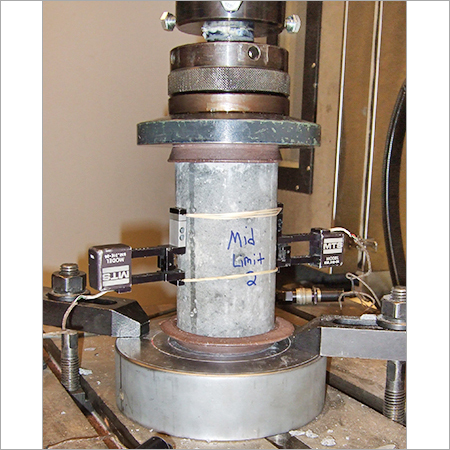
We are an independent & multi- disciplinary consultancy firm engaged in offering a reliable range of Marshal Stability Test. We conduct testing on construction materials like aggregate, soils, cement, rock, bitumen, concrete, paver block, tiles and bricks. Our veteran experts and engineers use modern tools and techniques to while executing these Marshal Stability Test. We are totally committed to the requirements of our customers and provide them the services as per their expectation.
Features:
- Tolerance free test results
- Prompt service
- Client centric approaches
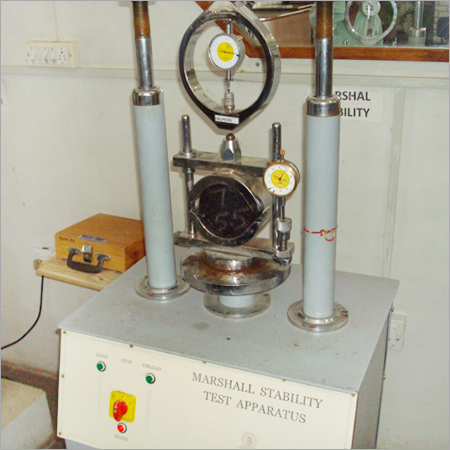
Accurate Stability and Flow EvaluationThis tester is engineered to deliver precise measurements for both stability and flow values of bituminous mixes, ensuring dependable results for road construction and pavement analysis. The device supports a maximum load of 50 kN and has a measurement accuracy for flow of 0.01 mm, enabling confident quality control in your lab.
Easy Operation and Display OptionsUsers benefit from a straightforward setup process, with digital and analog display options to suit varied preferences. The controlled load application speed of 50 mm/min and ergonomic dimensions simplify test execution and result interpretation, streamlining workflow for technicians.
Certified Calibration for Reliable ResultsWith each tester supplied with a calibration certificate, you can be confident in the accuracy and reliability of your measurements. Regular calibration assures compliance with ASTM D6927 and IS:1206 Part I standards, critical for professional testing environments.
FAQs of Marshal Stability Test:
Q: What is the primary purpose of the Marshal Stability Test?
A: The Marshal Stability Test is specifically used to determine the stability and flow value of bituminous mixes, which are essential for assessing pavement quality and performance in road construction.
Q: How is a sample prepared for testing on this device?
A: Samples are prepared by heating the bituminous mix to temperatures between 135C and 155C, as recommended by standard test methods. Proper sample preparation ensures accurate and consistent measurements.
Q: When should calibration be performed on the Marshal Stability Tester?
A: Calibration should be performed as per laboratory protocols or whenever accuracy verification is needed. The device comes with a calibration certificate to guarantee initial precision, and periodic calibration is advised for ongoing reliability.
Q: Where is this equipment commonly used?
A: This device is mainly used in laboratories engaged in road construction and pavement analysis, particularly in India, to evaluate bituminous mix samples according to ASTM D6927 and IS:1206 Part I methods.
Q: What are the usage benefits of digital and analog display types?
A: The availability of both digital and analog displays provides flexibility, allowing users to choose their preferred mode for data reading and interpretation. Digital displays facilitate quicker processing, while analog displays may aid in traditional analysis.
Q: How does the controlled load application speed affect the testing process?
A: The fixed load application speed of 50 mm/min ensures uniformity and repeatability during testing, which is crucial for achieving accurate and reproducible results according to accepted industry standards.





 Send Inquiry


 Send Inquiry